



A Look at Dame Catherine Cookson and Dame Daphne du Maurier
It is very unusual for us to write about another author at the Daphne du Maurier website. However, we have learned that Dame Catherine Cookson, a hugely popular and successful author in her mid-to-later years, is in danger of disappearing from our literary memory. Catherine Cookson was of a similar era to Daphne du Maurier. So, today we are going to look at Catherine and Daphne, draw some comparisons, discuss the differences and tell you about a young woman who is doing all she can to ensure that Catherine Cookson does not disappear, in the way many women writers born in the early part of the 20th century have done.
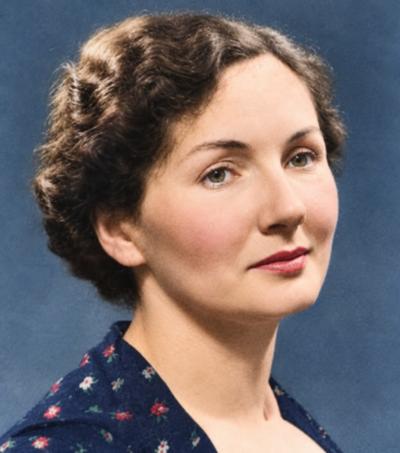
Catherine as a young woman
Catherine and Daphne were born within a year of each other: Catherine in June 1906 and Daphne in May 1907. Daphne was born into privilege and a comfortable life, with much of her childhood spent in her family's beautiful home, Cannon Hall, in Hampstead. She began writing pretty seriously as a teenager, beginning with poetry and short stories. By her early twenties, some of her early work was being published in the Bystander Magazine. Her first novel, The Loving Spirit, was published in 1931.
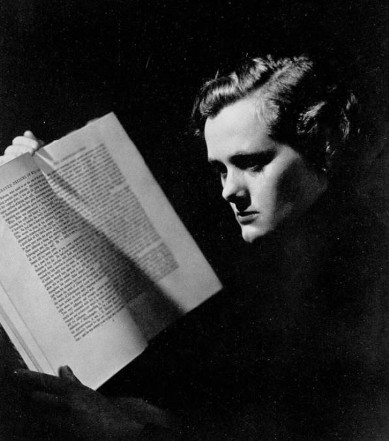
Daphne at about the time Rebecca was published
Catherine's beginnings were very different. She was illegitimate, born in South Shields, County Durham and brought up by her grandparents, believing for a long time that her unmarried mother was her sister. She left school at 14 and, after a period working in domestic service, took a laundry job at Harton Workhouse in South Shields. Despite a difficult start in life, Catherine had ambition, and in her early twenties she moved south to run the laundry at Hastings Workhouse. While there, she saved every penny until she could buy a large Victorian House and take in lodgers to supplement her income.
At the age of 25, Daphne married Frederick Browning (known as Tommy to family and Boy to colleagues), an army officer, and for the next few years lived the life of an army officer's wife, giving birth to their three children while continuing to pursue an ever more successful writing career. Tommy was away for long periods as WWII took its course, and Daphne moved into Menabilly with her children and, initially, their Nanny. Later, her former governess and dear friend Tod moved in and became the children's governess.
At the age of 34, Catherine married Tom Cookson, a teacher at Hastings Grammar School, but life was still not easy, and sadly she suffered four miscarriages late in each pregnancy. It was discovered that she had a medical condition that seems to have precluded her chances of a successful pregnancy. Much distressed, she suffered from a nervous breakdown from which her recovery was long and slow. During the ten years it took Catherine to recover, she turned to writing as a form of therapy. Her first novel, Kate Hannigan, was published in 1950.
In the early 1950s, Daphne was at the peak of her writing career, with books such as My Cousin Rachel achieving huge success. She continued to write fiction until 1972; then, when inspiration eluded her, she continued her writing career by producing excellent biographical work until the early 1980s. Catherine's was writing from 1950 until the 1998. So there was a long period when both women were producing published works at the same time.
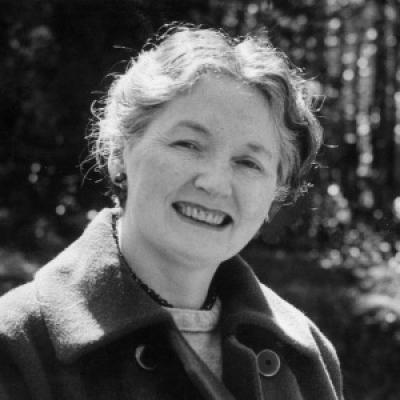
Catherine a little later in life
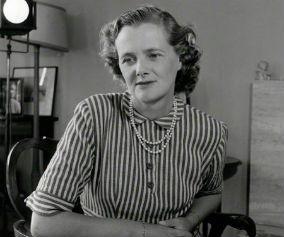
Daphne, also a little later in life
Interestingly, both Daphne and Catherine were labelled as romantic novelists, and both felt that title did their work a disservice. Daphne's publisher, Victor Gollancz, whilst excellent in all areas of publishing, persisted in promoting her as a romantic novelist, believing it encouraged her appeal with housewives who were reading her work, and that categorising her books this way helped them sell in large numbers. This was, of course, a sign of the times when men went to work, and women stayed at home, ran the household, raised the children, and looked after the menfolk, a way of life that is difficult to imagine now. Daphne never saw herself as a romantic novelist. Similarly, Catherine was clear that her books were historical novels, not romances.
Both Daphne and Catherine were created Dame Commanders of the Order of the British Empire, Daphne in 1969 and Catherine in 1993.
Daphne wrote novels, short stories, plays, biographies, and a book about Cornwall, and published about 40 books, plus several collections and omnibus editions. Catherine was much more prolific, writing over 100 books. She also wrote under the pseudonym Catherine Marchant and Kate McMullen (her childhood name).
One startling statistic relating to Daphne's writing is that Rebecca, which was first published in 1938, has never been out of print and even now sells 4,000 copies a week worldwide. Many of us can remember our mothers reading du Maurier titles that they had borrowed from the public library. She was immensely popular during her lifetime and remains so, partly thanks to the hard work of her literary estate. Thankfully, Daphne is no longer thought of as a romantic novelist, she is now, without doubt, recognised as a vital member of this country's literary heritage.
Catherine was hugely popular during her lifetime and for a while after her death. She sold 123 million copies of her books and was the author with the most books borrowed from public libraries for seventeen years, including four years after her death. She only lost that title in 2002, when Jacqueline Wilson took the top place for library books borrowed.
Daphne had at least seven of her novels and short stories made into plays, including the three that she wrote herself – Rebecca, The Years Between and September Tide; nine of her books were made into film for the big screen, five made for television, some of them more than once, and many of her plays and short stories have been produced for radio.
Catherine was even more prolific in this area. Many of her novels were adapted for film, stage, and radio. Early successes included her first film adaptation, Jacqueline (1956), based on her book A Grand Man and Rooney (1958), based on her book of the same name. The action for both these films was relocated from South Shields to Ireland for commercial reasons. In 1983, her novel Kate Mulholland was adapted into a stage musical. But it was on television that she saw her greatest media successes, with many of her books made into mini-series, a very popular format at the time. Between 1989 and 2001, eighteen of Catherine's books were adapted for television, keeping her and her books very much in the public eye. Her mini-series' can still be viewed on the Drama and Yesterday Channels.
Daphne took part in only a very small number of radio programmes and made two television documentaries. She believed that writers should be read, but neither seen nor heard! Catherine was much more forthcoming, taking part in several television interviews and even starring in her own episode of This is Your Life. This was an immensely popular British television programme in which Eamonn Andrews (and later Michael Aspel) surprised a special guest by taking them through their life, aided by family members and friends and with the assistance of 'the big red book', in front of a live television audience. If the special guest found out the show was cancelled, so there was always a huge element of surprise and a certain amount of jeopardy.
Current authors writing in the style of Catherine Cookson, including Val Wood, Dilly Court, Rosie Goodwin, and Leslie Pearse. If people are buying and enjoying these authors, I can see no reason why they should not still be reading Catherine Cookson. I think it is because there is no publicity for her work any more. It seems she does not have a literary estate working in her interest. This is very sad considering that many of her books are still in print. Her principal publisher is Transworld Publishers Ltd.
A recent check showed that Catherine's books are currently not stocked in any of the top six bookshops in the north of England. I don't know whether to be cross or sad about that.
Biographies about Daphne are pretty well known, and for anyone who is not sure, there is a list in the bibliography on the Daphne du Maurier website, here: https://www.dumaurier.org/bibliography_list.php?id=5&bid=1.
There are several biographies of Catherine Cookson, as follows:
To Be a Lady: Biography of Catherine Cookson by Cliff Goodwin, published in 1994.
The Girl from Leam Lane: The Life and Writing of Catherine Cookson by Piers Dudgeon, published in 1997.
Catherine Cookson by Kathleen Jones, published in 1999.
Kate's Daughter: The Real Catherine Cookson by Piers Dudgeon, published in 2003.
Seeking Catherine Cookson's Da by Kathleen Jones, published in 2004.
Catherine Cookson: Child of the Tyne by Kathleen Jones, published in 2018.
It should be possible to get the last title as a new book. The others are out of print, but you can easily find second-hand copies quite cheaply through AbeBooks.co.uk.
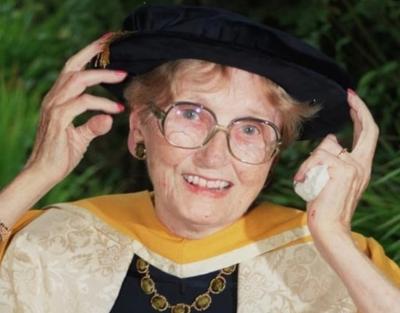
Catherine, closer to the end of her writing career
An interesting link between Daphne and Catherine is that Piers Dudgeon has also written several books about Daphne du Maurier and members of her family. In 1989, he edited Daphne du Maurier: Enchanted Cornwall – Her Pictorial Memoir, a much-loved and sought-after book. Later he wrote two books essentially about Daphne's cousins, the five Llewelyn Davies boys – George, Jack, Peter, Michael and Nico, for whom J.M. Barrie wrote the story of Peter Pan. That apparently magical phrase hides five lives in which terrible things happen and where there is great sadness, but in his two books, Captivated: J.M. Barrie, The du Mauriers & the Dark Side of Neverland and The Real Peter Pan: The Tragic Life of Michael Llewelyn Davies, Piers Dudgeon gives us the facts to do with what we will and, in doing so, provides us with a lot of information about the du Maurier family as a whole, including lots about Daphne.

Daphne, towards the end of her writing career
Hope for Catherine Cookson is not lost because a young woman called Gemma Carolan has picked up the gauntlet and is determined not to let Catherine Cookson disappear.
She has a number of strategies to bring Catherine back to peoples attention. Firstly, she has started an excellent podcast, which is a great and very popular way to get people interested and talking about her. It is called Catherine Cookson Country. It has been live for about a month, and so far it has five podcasts on it, not very long ones, so it is very easy to listen to them.
Next, Gemma started an Instagram account called catherine_cookson_country. Here at the Daphne du Maurier website, we love Instagram; it is so easy and fun, and you get to see beautiful images and learn snippets of information. Do have a look at the Catherine Cookson one, and keep going back to it to stay in the loop of what is happening.
There is a third thing that Gemma is doing, and this is fabulous. The 125th anniversary of Catherine Cookson's birth is in five years, and Gemma has set herself a reading marathon: she intends to read all 104 of Catherine's books between now and Catherine's 125th birthday. She is starting with Catherine's first book, KATE HANNIGAN, and you can follow her progress on Instagram and through her podcasts. You can also join in and read along with Gemma. Of course, you don't need to read all the books, but you could pick one here and there and read it at the same time as Gemma.
Gemma is also hoping to build a website for fans of Catherine Cookson, so she'll be a busy lady for the next five years and, hopefully, bring together an ever-increasing band of people who love the works of Catherine Cookson, and in doing so bring Catharine back into the public eye.
Here at the Daphne du Maurier website, we feel extremely fortunate that Daphne is remembered and loved by her followers, and loved and supported by her family and literary estate.
Let's help Gemma do the same for Catherine Cookson.
November 2026.