



A Gothic Cookbook: Hauntingly Delicious Recipes Inspired by 13 Classic Tales – A Book Recommendation
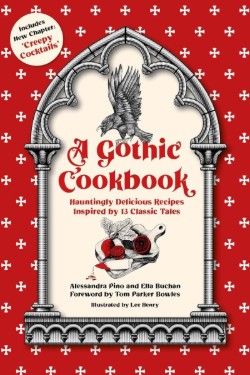
Today we recommend a book which is a bit different, because it is neither a work of fiction nor a biography. The book we are talking about today is called A Gothic Cookbook: Hauntingly Delicious Recipes Inspired by 13 Classic Tales. It is a recipe book, but it is also much more than that.
A Gothic Cookbook was written by Alessandra Pino and Ella Buchan, includes a foreword by Tom Parker Bowles, and was illustrated by Lee Henry. It was published in paperback by The History Press in October 2026.
What makes this book so special is that it not only includes some super recipes, but also sets them in the context of the classic novels they come from.
The novels referred to in the book are Frankenstein, Jane Eyre, The Woman in White, The Picture of Dorian Gray, Dracula, Rebecca, The Heart is a Lonely Hunter, The Haunting of Hill House, Rosemary’s Baby, The Bloody Chamber, The Woman in Black, Beloved and The Gilda Stories.
For each chapter, the authors choose a section from one of the books that includes references to food, describes what is happening in the story, and includes recipes related to that passage in the novel. Recipes include Fosco’s Favourite Fruit Tart from The Woman in White, Robber Steak from Dracula, A Supper of Sausages from The Bloody Chamber, and so many more.
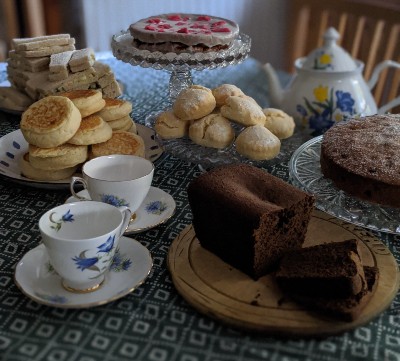
Here at the Daphne du Maurier website, chapter six is the most interesting to us. The chapter is called The Tyranny of Tea, and Tales Told by Tangerines, in Daphne du Maurier’s Rebecca. This chapter looks at two different sections of Rebecca. The first is the afternoon tea that takes place in the library at Manderley every afternoon at 4.30pm sharp.
Here is the description:
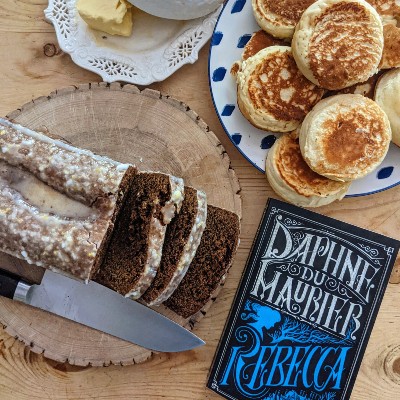
Those dripping crumpets, I can see them now. Tiny crisp wedges of toast, and piping-hot, floury scones. Sandwiches of unknown nature, mysteriously flavoured and quite delectable, and that very special gingerbread. Angel cake, that melted in the mouth, and his rather stodgier cousin, bursting with peel and raisins. (Rebecca by Daphne du Maurier, Virago edition 2003, page 8).
Recipes for all the elements of the afternoon tea are included in the book.
The second reference is to the tangerine Maxim has as part of his breakfast at the hotel in Monte Carlo, where he first meets our nameless narrator. Maxim offers the narrator a few segments of the tangerine; it is rather sour and it leaves a sharp, bitter taste in her mouth as she ponders the fact that, despite proposing, Maxim has made no mention of his loving her. No recipe here, perhaps just a stark warning of what is to come!
Do get a copy of this book. There is so much to read and enjoy, and so many wonderful recipes to try. A Gothic Cookbook is different, interesting and fun. We highly recommend it.
November 2026.